You've probably seen the round marks cupping leaves behind — but what actually happens during a session? Here's a straightforward explanation of one of the clinic's most-asked-about therapies.
What is cupping therapy?
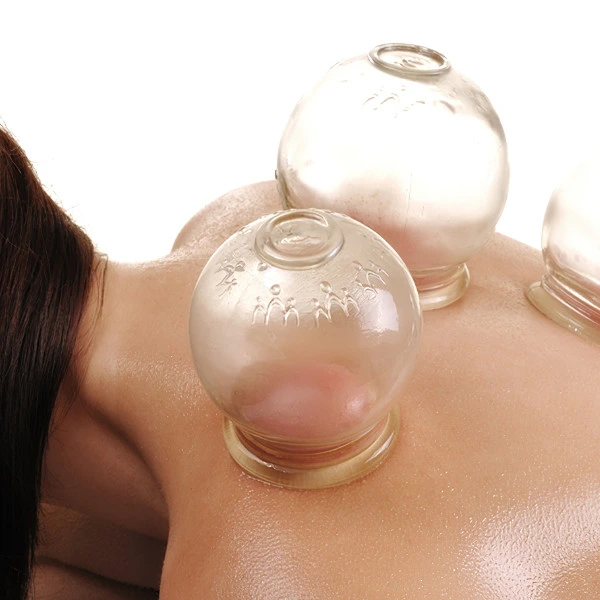
Cupping involves placing small, rounded cups — usually glass or silicone — onto the skin and creating a gentle suction inside them. This suction lifts the skin and the tissue just beneath it slightly upward into the cup, which is what creates the characteristic circular mark that can last a few days afterward.
It's a practice with a long history across several traditional medicine systems, and is often used on the back, shoulders, and legs — areas where muscles tend to hold tension.
How a typical session works
Before starting, Reshika will check in on the area you'd like addressed and explain what to expect. The skin is usually warmed slightly, sometimes with a light oil, to help the cups move and seal smoothly.
The cups are then placed on the chosen points and left in place for a few minutes, or sometimes gently moved across the skin in slow strokes — this is often called "sliding cupping." The suction level is adjusted to your comfort, and you're encouraged to speak up if anything feels too intense.
Sessions are usually fairly quick, often well under thirty minutes, and are frequently combined with acupuncture or used as a standalone session depending on what you're looking for.
What it generally feels like
Most people describe the sensation as a tight pulling or stretching feeling rather than pain. It's similar to a deep-tissue massage in the way it can feel intense in the moment but satisfying afterward. The circular marks left behind are not bruises in the painful sense — they're usually painless and fade gradually over a few days to a week.
General wellness benefits
Cupping is commonly chosen by patients looking for relief from general muscle tightness and tension, or simply as a way to unwind physically. Many people report feeling looser and lighter in the treated area after a session, along with an overall sense of relaxation.
A few practical notes
Because of the temporary marks, it's worth planning your session around any events where you'd prefer clear skin on display — sleeveless outfits, for instance. Wearing loose clothing to your appointment also makes it easier to access the area being treated comfortably.